Pulished on Sep. 17, 2026
Choosing between a 2 ton and 3 ton electric forklift can look easy at first. One lifts more; the other is usually smaller and cheaper to run. In real warehouse work, though, capacity is only part of the story.
Too big a forklift eats up aisle space and pushes up purchase and running costs. Too small a one brings a different issue—operators often work near rated capacity, leaving little room when heavier pallets show up.
For dealers, wholesalers, warehouse managers and equipment buyers, the better question is not simply, “Do I need 2 tons or 3 tons?”
It is:
What does the forklift actually need to move every day?
This guide compares 2 ton vs 3 ton electric forklifts from a practical B2B purchasing point of view.
2 Ton vs 3 Ton Electric Forklift: Quick Comparison
Item | 2 Ton Electric Forklift | 3 Ton Electric Forklift |
Rated Load Capacity | 2,000 kg | 3,000 kg |
Best For | Light to medium loads | Medium to heavier loads |
Typical Environment | Warehouse, factory, logistics | Warehouse, factory, manufacturing, loading |
Maneuverability | Generally better | Generally requires more space |
Purchase Cost | Usually lower | Usually higher |
Energy Demand | Generally lower | Generally higher |
Heavy Pallet Handling | Limited | Better |
Narrow Aisle Use | Better when compact | Depends on model dimensions |
Application Flexibility | Good | Higher |
Typical Buyer | Warehouses and light industry | Industrial and higher-capacity users |
The table gives a quick answer, but actual forklift selection should also consider load center, lift height, attachment type, aisle width, working hours and battery configuration.
The most obvious difference is capacity.
A 2 ton electric forklift has a rated load capacity of 2,000 kg, while a 3 ton electric forklift is rated for 3,000 kg under specified conditions.
That doesn’t mean a warehouse moving 1,900 kg pallets should simply buy a 2 ton model.
Rated capacity assumes defined conditions, such as a given load center and mast configuration. Real capacity shifts when the load center moves forward, lift height grows, or an attachment gets installed.
Take a firm that usually moves 1,200-1,500 kg pallets but sometimes gets loads near 1,800 kg. A 2 ton model can handle that fine if the load dimensions and conditions stay inside rated limits.
A business that regularly handles loads near 2,000 kg, though, should review its actual working conditions before settling on a 2 ton machine.
Buying exactly at the limit leaves less flexibility.
A 2 ton electric forklift is a practical choice for many standard warehouse and factory applications.
Typical jobs include:
l Pallet handling
l Warehouse loading and unloading
l Production line material movement
l Finished goods handling
l Indoor logistics
l Retail and distribution warehouses
l Light manufacturing
One reason 2 ton models are popular is that they offer enough capacity for many everyday loads without making the truck unnecessarily large.
In warehouses where space matters, a compact forklift can be more useful than a higher-capacity truck.
If your normal loads are comfortably below 2,000 kg and the forklift spends much of its time moving through storage racks, doorways or relatively narrow working areas, the smaller truck often makes more sense.
A 3 ton electric forklift becomes more attractive when heavier loads are part of normal daily work.
Common applications include:
l Heavy pallet handling
l Machinery and metal products
l Building materials
l Manufacturing plants
l Paper and packaging
l Large warehouse operations
l Container loading and unloading
l Industrial material handling
l The extra capacity also gives buyers more flexibility.
A warehouse may handle 1.5 ton pallets today but receive heavier products from new customers next year. In this situation, choosing a 3 ton forklift may reduce the need to purchase another machine later.
This is especially relevant for rental companies, forklift dealers and distributors because their end customers may use the same forklift for different applications.
Capacity gets most of the attention during purchasing, but operators often notice forklift dimensions much more during daily use.
A larger forklift generally needs more room to turn and position a pallet.
In a large factory yard, that may not matter.
Inside a warehouse with tight rack spacing, it matters every few minutes.
A compact 2 ton electric forklift can therefore have a real advantage in:
l Narrow warehouse aisles
l Small factories
l Indoor storage areas
l Areas with frequent turns
l Operations where space is limited
Before ordering, check the actual truck dimensions, turning radius and aisle requirements rather than assuming every 2 ton or 3 ton forklift has the same dimensions.
Two forklifts with the same rated capacity can have noticeably different layouts.
Capacity alone does not tell you whether a forklift is suitable.
You also need to know how high the load will be lifted.
A customer moving a pallet 200 mm above the floor has a different requirement from a customer placing it several meters high in a warehouse rack.
When requesting a quotation, it is better to provide the supplier with:
load weight + load dimensions + required lift height + working environment.
This gives the manufacturer much more useful information than simply saying:
“I need a 2 ton forklift.”
Mast type also matters. Different applications may require duplex or triplex mast configurations, while container operations may have additional height restrictions.
Both 2 ton and 3 ton electric forklifts can be configured with different battery solutions depending on the model and customer requirement.
For many modern warehouse applications, lithium battery electric forklifts are becoming a popular choice.
The reason is practical.
Lithium batteries can offer fast charging, opportunity charging and lower routine maintenance. For a forklift working long hours every day, those benefits can reduce interruptions during a shift.
Lead-acid batteries remain useful where initial purchase price is more important and the forklift has enough downtime for conventional charging.
For a machine used only a few hours each day, paying more for a larger lithium battery system may not always be necessary.
Battery selection should follow the working schedule.
Generally, a larger and heavier forklift has higher energy requirements, but actual electricity consumption depends on much more than rated capacity.
Factors include:
l Load weight
l Travel distance
l Lift frequency
l Lift height
l Driving speed
l Working hours
l Floor conditions
l Operator behavior
l Battery and drive system efficiency
A 3 ton forklift moving light loads occasionally may use less energy than a 2 ton forklift working intensively all day.
This is why comparing battery capacity alone can also be misleading.
For B2B buyers, it is better to describe the real duty cycle and ask the supplier to recommend a suitable battery configuration.
In most comparable configurations, yes.
A 2 ton electric forklift will normally have a lower purchase price than a similar 3 ton model.
But capacity is only one factor affecting the final quotation.
Price can also change according to:
l Battery type and capacity
l Mast height
l Charger
l Fork length
l Tires
l Controller and electrical system
l Cabin or weather protection
l Side shift
l Fork positioner
l Clamp or other attachments
l Customized branding
This is particularly important when comparing quotations from different forklift suppliers.
A cheaper quotation is not necessarily the same specification.
Before comparing price, make sure you are comparing similar battery systems, mast configurations, components and accessories.
This is an area where buyers should be careful.
Attachments change the way a forklift handles a load.
A side shift, paper roll clamp, carton clamp, bale clamp or fork positioner adds weight and can change the effective load center. As a result, the remaining lifting capacity may be different from the truck's basic rated capacity.
For example, a customer may say:
“My goods weigh 2 tons, so I need a 2 ton forklift with a clamp.”
That conclusion may be wrong.
Once the attachment, load dimensions and load center are considered, a higher-capacity forklift may be required.
If you need an attachment, provide the manufacturer with the weight, dimensions and type of goods before confirming the forklift model.
Electric forklifts are widely used indoors because they have no tailpipe exhaust emissions at the point of use and generally operate with lower noise than internal combustion forklifts.
But many electric forklifts also work outdoors.
The important questions are:
Is the ground smooth or uneven?
Are there slopes?
Will the forklift work in rain?
How far does it travel?
How many hours does it operate per shift?
A compact 2 ton model can be an excellent warehouse truck, while a more robust 3 ton configuration may suit heavier industrial work.
The model should be selected around the working environment rather than capacity alone.
For dealers and importers, the decision is slightly different because you are not purchasing for only one application.
You need models that match demand in your local market.
A 2 ton electric forklift can cover a broad range of general warehouse customers. It is a useful capacity for logistics, factories and standard pallet handling.
A 3 ton electric forklift gives you access to customers with heavier material-handling requirements and can provide greater application flexibility.
For distributors building an electric forklift product range, offering both capacities can make sense.
The key is not simply stocking more models. It is choosing configurations that fit the customers you actually sell to.
When comparing a 2 ton and 3 ton forklift, ask these questions before placing an order:
1. What is the normal load weight?
2. What is the maximum load weight?
3. What are the load dimensions?
4. What is the load center?
5. How high must the load be lifted?
6. How wide are the working aisles?
7. How many hours will the forklift work per day?
8. Is the operation indoor, outdoor or both?
9. Is lithium or lead-acid battery preferred?
10. Are attachments required?
These ten answers usually tell a supplier much more than the requested tonnage alone.
Where routine warehouse loads sit well below 2,000 kg, a 2 ton electric forklift often works best for practical day-to-day use.
It brings reliable lifting performance while remaining compact and affordable to run.
Operations that regularly move heavier pallets, need spare load capacity, install attachments, or seek flexibility for later projects would be better off investing in a 3 ton electric forklift.
There is no point purchasing a forklift with more capacity than your workflow actually needs.
Similarly, saving money on a smaller unit is a poor trade-off when it cannot safely and efficiently manage your real loads.
Your ideal choice lies in balancing both situations.
At EIOUU, we manufacture electric material handling equipment for international B2B customers, including forklift dealers, wholesalers, importers and industrial buyers.
Our electric forklift range covers different load capacities and application requirements, with configurations available for warehouse, factory and logistics operations.
Depending on the model and project requirements, customers can discuss options including lithium battery systems, mast configurations, tires, forks, attachments and other specifications.
We also support OEM & ODM cooperation for distributors looking to develop electric forklift products for their own markets.
If you are not sure whether your customer needs a 2 ton or 3 ton electric forklift, send us the load weight, load dimensions, lift height and working conditions.
Choosing the right configuration before ordering is much easier than discovering after delivery that the forklift is too large—or not large enough.
For many warehouses, yes. If regular pallet weights sit well under 2,000 kg, and the required lift height plus load center fall within its rated capacity, a 2 ton model works well.
Rated lifting capacity stands as the primary distinction. You will also see variations in truck size, battery specs, turning performance, upfront cost and suitable use cases.
Not under every condition. Actual capacity depends on factors such as load center, lift height, mast configuration and attachments. Always check the manufacturer's load-capacity information for the required configuration.
Not necessarily. Outdoor fitness relies on the forklift design, tires, ground surface, slopes and weather safeguards, not just its rated load capacity.
A compact 2 ton electric forklift usually handles tight spaces more easily. Still, always verify overall dimensions and turning radius; capacity alone cannot tell you if it fits your aisles.
For suitable projects, EIOUU supports OEM & ODM cooperation for international distributors, wholesalers and other B2B customers. Configuration requirements should be confirmed before production.
 Previous: None
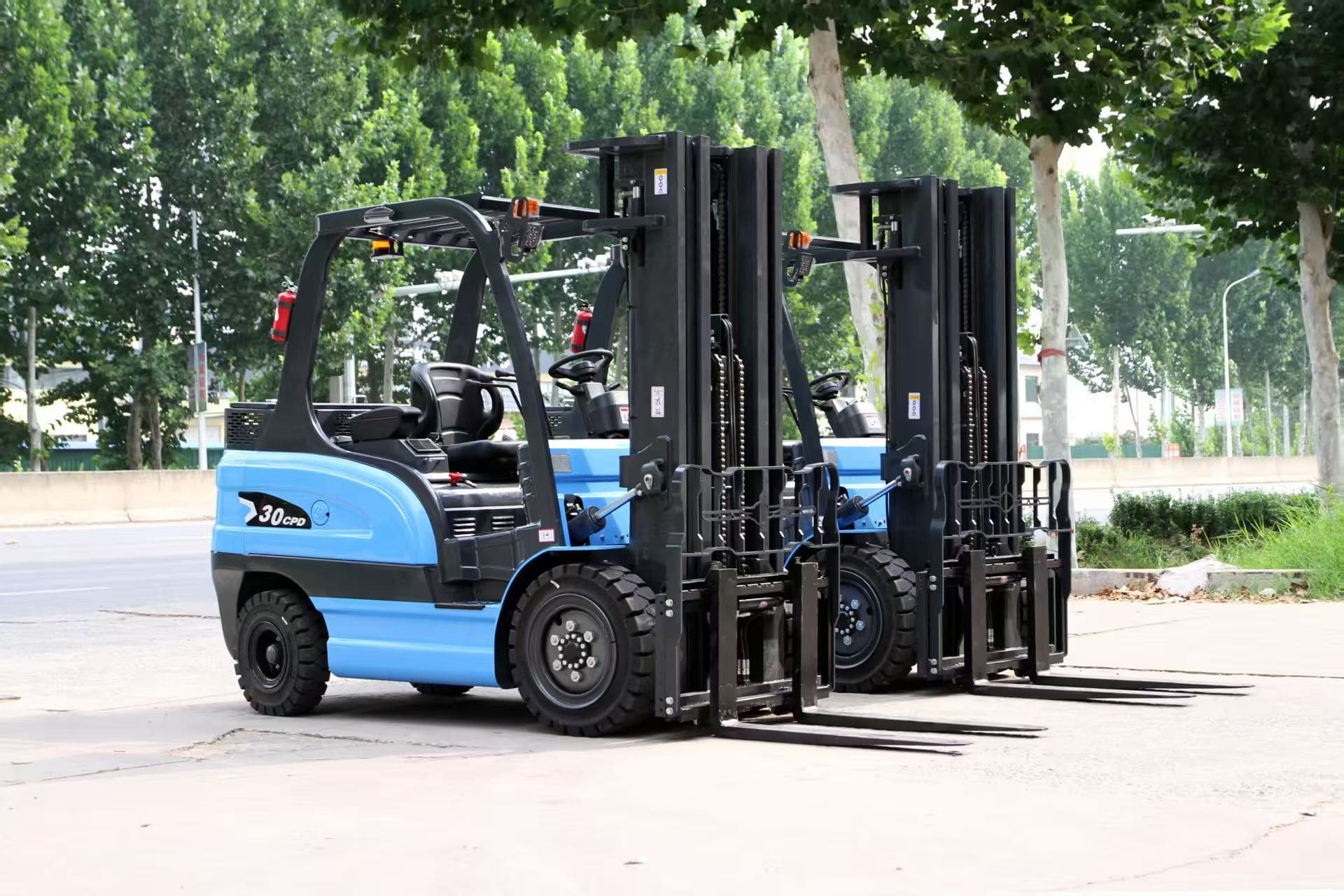
2 Ton vs 3 Ton Electric Forklift: Which One Should You Choose?
Published on Sep. 17, 2026

Lithium vs Lead-Acid Forklift Batteries: Which Is Better for Your Business?
Published on Sep. 12, 2026


314, Building 3, No. 12 Haitai Development 2nd Road, Binhai High-tech Zone, Xiqing District, Tianjin, China


Copyright © Tianjin HRX Technology Co., Ltd. All Rights Reserved. Sitemap
Home ProductsAbout usOEM/ODMNewsContact Us